| — | A Theology of Mark by Hans F. Bayer, p. 62 |
| — | A Theology of Mark by Hans F. Bayer, p. 72 |
| — | A Theology of Mark by Hans F. Bayer, pp. 71-72 |
| — | A Theology of Mark by Hans F. Bayer, p. 62 |
| — | A Theology of Mark by Hans F. Bayer, p. 72 |
| — | A Theology of Mark by Hans F. Bayer, pp. 71-72 |
This book is an attempt to remedy this situation. Though there is value in other approaches to discipleship, our purpose here is to explore a more comprehensive approach-that of Jesus with his own disciples ... many readers will be surprised-perhaps as surprised as the original band of disciples. (p. 1)He goes on to say:
We will argue that Jesus teaches, exemplifies, and above all enables "pattern-imitation" among his followers rather than simply calling for a simplistic, self-generated "copying of Christ". (p. 12)
The twelve initial companions of Jesus, chief among them Peter, were indeed taken by surprise, as John Mark's presentation of Peter's account reveals. The account is honest, self-critical, transparent, and unadorned. The group with which Jesus works admits to disbelief and the inability to comprehend key aspects of his person and teaching. The Master is portrayed as incomprehensible and yet deeply personal, puzzling yet captivating, awesome yet the harbor of profound hope. What has been revealed about the purposes of God in the Old Testament is brought by the disciples' Master to a perplexing yet exhilarating realization. In the wake of this realization, preconceived expectations held among Jews in first-century Palestine are shattered to make room for the unexpected yet deeply biblical appearance of "him who is to come." In the end, the profound claims laid upon Mark's readers are a consequence of the eminent stature, sacrificial commitment, and transforming power of the Master, as well as his knowledge of the human heart. (p. 1-2)
Based on these observations, the ultimate purpose of Mark is to legitimize Jesus' universal and authoritative call to discipleship (see the narrative repetition of this theme and the fact that the audience of Jesus splits into followers and opponents as the narrative unfolds). The two-fold outline ... demonstrates that the central effort in presenting this call is to narrate the identity, action, teaching, and severe testing of Jesus. This fact already indicates that discipleship in Mark is essentially a function of the eminence of the Master's person, deeds, and teaching, not of a certain code of conduct for the disciples. (p. 24)Quite so. But I'm sure this could have been stated in a more straightforward way. In fact, this is one point I could raise on numerous occasions. The language is a tad academic without needing to be so. I suppose this has made me read more carefully.
The people of Israel thus had a fixed plan for their Messiah, and the Messiah had to fit into that plan (cf. John 6:15) ... As soon as Jesus acts remotely like the expected messianic figure, he will be the spark which may cause a political uprising. While the atmosphere is pregnant with a particular expectation of political liberation, Jesus, as the eternal Son of God, is sent for a broader messianic purpose that includes the totality of the Old Testament anticipation of liberation by God ... The root problem of human alienation from God and self has to be dealt with above all else." (p. 47)
The Jesus Way: The Essential Christian Starter Kit by Peter Walker. Monarch Books, 2009.
Dr Peter Walker was lecturer at Wycliffe Hall, University of Oxford. In his academic capacity he has focused a lot on Jerusalem and the Holy Land*. In fact, he has written the book that I think anybody studying Eschatology should read carefully - Jesus and the Holy City: New Testament Perspectives on Jerusalem (Eerdmans, 1996). However, as a churchman he has written many more books to help Christians understand the Bible and how to be disciples of Jesus. The Jesus Way is in this later category. Walker focuses on two chapters of the Bible - Luke 24 (Learning from Jesus Himself) and Acts 2 (Learning from the Apostles). This in itself is helpful as the reader has two chunks of Scripture to meditate on while reading the book.
The contents are:
I think this book is an excellent modern introduction to the Christian life. The teaching contained in it is solid, minus gimmicks and to the point. It would be very useful to new adult Christians and, with the addition of a good study Bible and a healthy local Church, would set a good foundation for growth and maturity in the faith.
* See the following books edited by Walker.
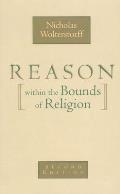
Nicholas Wolterstorff thinks so. The following quotes are from "Reason within the Bounds of Religion", 1984, Eerdmans, 2nd Ed.
On February 19, 1616, the Holy Office in Rome submitted to its theological experts the following two propositions for their assessment:The theologians met four days later on February 23, and the day after that announced the results of their deliberations. Their conclusions were unanimous. The first proposition they declared to be "foolish and absurd philosophically, and formally heretical, inasmuch as it expressly contradicts the doctrine of the Holy Scripture in many passages, both in their literal meaning and according to the general interpretation of the Fathers and Doctors." The second proposition they declared "to receive the same censure in philosophy, and as regards theological truth to be at least erroneous in faith." (p. 15)
- The sun is the center of the world and hence immovable of local motion.
- The earth is not the center of the world, nor immovable, but moves according to the whole of itself, also with a diurnal motion.
The matter was then handed over to the Congregation of the Index (under the General Congregation of the Inquisition). On March 5 of the same year this Congregation handed down its decree:It has ... come to the knowledge of the said Congregation that the Pythagorean doctrine - which is false and altogether opposed to the Holy Scripture - of the motion of the Earth, and the immobility of the Sun, which is also taught by Nicolaus Copernicus in De revolutionibus orbium coelestium, and by Diego de Zuniga (in the book) on Job, is now being spread abroad and accepted by many.... Therefore, in order that this opinion may not insinuate itself any further to the prejudice of Catholic faith, the Holy Congregation has decreed that the said Nicolaus Copernicus' De revolutionibus orbium, and Diego de Zuniga's On Job, be suspended until they be corrected.... In witness whereof the present decree has been signed and sealed with the hands and seal of the most eminent and Reverend Lord Cardinal of St. Cecilia, Bihop of Albano, on the fifth day of March, 1616. (p. 16)
Sometimes an incompatibility between what the Christian scholar regards as the results of science and what he regards as the belief-content of his authentic commitment, can best be resolved by the Christian's revising his beliefs on the latter, for he may have been mistaken as to what constitutes the belief-content of his authentic commitment. (p. 94)
... the Congregation of the Inquisition viewed the geocentric theory as belonging to authentic commitment. I think they were mistaken, and virtually the entire community of Christians now thinks they were mistaken. We have all revised our beliefs, though we have by no means all revised them at the same point. What originally induced the revisions were developments in astronomy and physics. Thus it must be concluded that developments in science have induced at least some of us to move toward a better view as to what constitutes authentic Christian commitment - if you assume (as I do) that at least some of the revisions constitute a better view. (p. 94)
Christians have been mistaken in what they thought constituted authentic Christ-following; and sometimes they have become aware of their mistake through developments in science. (p. 95)
"So then in our evangelistic proclamation we must address the whole person (mind, heart and will) with the whole gospel (Christ incarnate, crucified, risen, reigning, coming again and much else besides). We shall argue with his mind and plead with his heart in order to move his will, and we shall put our trust in the Holy Spirit throughout. We have no liberty to present a partial Christ (man but not God, his life but not his death, his cross but not his resurrection, the Saviour but not the Lord). Nor have we any liberty to ask for a partial response (mind but not heart, heart but not mind, or either without the will). No. Our objective is to win a total man for a total Christ, and this will require the full consent of his mind and heart and will." John Stott, Your Mind Matters, p. 73, IVP, 2006 (orig. 1972)
I remember going to hear Ken Ham (leader of a young earth creationist group) in Belfast sometime in 1991 or 1992. At that point in time, as an 18 year old who had been a Christian for a few years, I had a vague notion that there might be a conflict between science and the Bible but it was not something keeping me awake at night. However, when I went with my church youth fellowship to hear Ken Ham, the conflict became real and it did keep me awake at night. Finally, I had a way to show my non-Christian friends how groundless their belief in the 'religion of science' was. Finally, the Bible was really trustworthy. Finally, I could see how much Evangelical Christianity was actually made up 'compromisers' and therefore could not be trusted. Everything became black and white, all very neat. For me and a few friends, young earth creationism became the test of orthodoxy for how much we trusted other Christians.
Ken Ham not only made the conflict between the Bible and science real, he offered a solution:
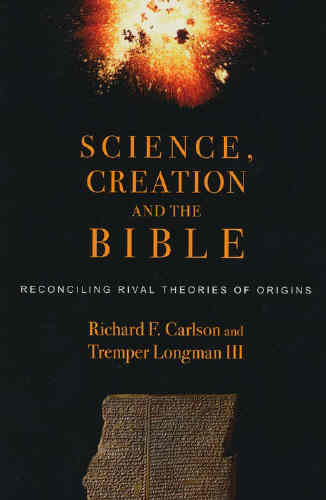
Science, Creation and the Bible: Reconciling Rival Theories of Origins by Richard Carlson and Tremper Longman III is a short book on a big topic. Carlson and Longman find the conflict 'satisfactorily resolvable' and 'fully satisfactory to Christians' (p. 12). They do not detail 'the conflict' so the reader will have to look elsewhere to determine if 'the conflict' actually exists and to what extent. I would recommend History of Christian Theology: Creation and the History of Science by Christopher B Kaiser and The Creationists: From Scientific Creationism to Intelligent Design by Ronald L Numbers. Carlson and Longman do hint at where the conflict can be primarily found,
Christians who read Genesis literally reject this science, regarding it as a faulty, godless and anti-Christian enterprise. Some have made significant efforts to establish the earth as thousands and not billions of years old and to characterize evolutionary schemes as incompatible and erroneous (p. 27).They also highlight the other direction when scientists step outside their areas of expertise and begin making metaphysical statements about God based on what they have discovered in their laboratories.
In what really sums up their position, the authors go on to say:
If the first two chapters of Genesis present the fundamental character of an ancient Hebrew people rather than a factual scientific account of beginnings that meets contemporary standards, then it is not appropriate to try to reconcile contemporary science with the Genesis accounts (p. 14).All very neat and simple. Maybe to neat and simple?
The book has seven chapters that aim to show how the reader can also find 'the conflict' to be satisfactorily resolvable. Chapter 1 provides the full text of Genesis 1 and 2 and a description of the prevailing scientific account of origins. It also presents four Christian viewpoints on origins - (1) Creationism, (2) Intelligent Design, (3) Partnership and (4) Independence. This is merely to whet the appetite of the reader as the authors do not have space to fully describe these positions with all of the nuances. For example, the authors state that "The choice in the minds of many Christians is faithful (literal) Bible reading versus atheistic science. Two mistaken ideas underlie this choice. Faithful Bible reading does not always imply literal reading, and science as a whole should not be classified as atheistic but rather as methodologically naturalistic, not metaphysically naturalistic." (p. 27) This is somewhat simplistic and does not deal with the fact that many young earth creationists would agree with them regarding literal Bible reading.
Chapter 2 very briefly addresses the characteristics of theology and science, the role of common sense, sound interpretive processes and how science and theology might inform each other in interpretation. The authors say:
Biblical interpretation (but not the original words of the Bible) may even undergo change or correction in the light of continuing experience and further reflection ... Christian theology needs to pay attention to any source of knowledge that can add relevant information to an issue under consideration. Part of this, derived from experience, may come from sources other than Scripture (e.g. from scientific investigations). (pp. 37-38)Furthermore,
The use of the Bible requires careful reading and skillful interpretation. Any systematic interpretive method must include the reader's attempt to understand the intent of the biblical writer in delivering a given message to its first hearers or readers. A biblical passage cannot mean something to twenty-first-century readers in contradiction to what it meant to those for whom it was first intended. (p. 46)Again, Carlson and Longman do not address the fact that many young earth creationists would agree i.e. the original readers/hearers would have understood six real days therefore so should twenty-first-century readers. I am not saying that 'six real days' is what the original readers/hearers understood. But many Christians assume it was.
Pages 58 and 59 contain, what I think are, the key points of the book in relation to Genesis 1 and 2:
The sacred author formed his creation accounts in terms of the scientific and historical understandings of the ancient people of Israel ... We wish to explore the possibility that certain passages in literary works in general and in the Bible in particular are significantly more true when understood in a nonliteral way. In certain cases, a writer will intentionally use the nonliteral genre of story or fantasy ... to convey truth in a more effective way than if the writing were merely factually accurate. The case will be made later that rather than factual accounts, Genesis 1 and 2 function for twenty-first-century Christians as two different stories of creation, stories that describe creation in the form of scientific and historical accounts as understood by the ancient people of Israel, but that are not historically and scientifically factually true by twenty-first-century standards ... A passage of Scripture correctly identified as written in a nonliteral genre is no less inspired than a passage using a literal genre.I think this is where most young earth creationist Christians will bottle it. "More true" and "not historically and scientifically factually true"? Surely God could inspire something that is comprehensible to the ancient people of Israel and historically and scientifically factually true to the twenty-first-century Christian? Does it have to be either/or? Carlson and Longman do not dig below the surface (although they do quote a bit from Peter Enns 'Inspiration and Incarnation, which I really must get and read).
In chapters 4 and 5, the authors discuss how the Old Testament and New Testament use creation. This is important as they want to uphold the principle of 'Scripture interprets Scripture'. The theory is, if we know how creation texts function in other parts of Scripture then we will be better placed to understand how they function in Genesis. Carlson and Longman say that the creation Psalms are "joyous songs praising God for his creative power, care and wisdom." (p.95) These themes are echoed in Genesis 1, Isaiah 40 and Job 38-41. The New Testament clearly places the creative and sustaining power of all that there is with Jesus. I am not sure that the authors achieve what they want to through Chapters 4 and 5. It seems a little disjointed from the rest of the book.
So what does all of this means for Genesis? According to Carlson and Longman:
Our conclusion is that most likely the Genesis creation narratives are not to be read literally but rather are to be read as stories that have two levels of truth. First, the Genesis 1 account represents the ancient Hebrews' understanding of cosmic history and development, including the earth and its inhabitants. But the sacred author was not as concerned about the factual details as he was about clearly presenting theological concepts understandable by his intended audience, the ancient Hebrews. Genesis 2 has a different theological purpose, and the author did not hesitate to tell a story that contained this truth. The theological messages in these chapters represent the second level, the level under the story of both creation accounts. The first level is irrelevant today because of scientific and cosmological historical understanding. But the second level, the theological level, inspired by the Holy Spirit, contains the message that is relevant for all people yesterday, today and into the future. And it is at this level that the importance of Genesis creation comes to the forefront. In short, we propose that Genesis 1 and 2 are nonliteral accounts, housed in an ancient cosmology and a story of humankind's beginnings, whose purposes are to teach important theological truths. (p. 126)Again, some of this will be hard to swallow for many young earth creationist Christians. Statements such as "not as concerned about factual details", "The first level is irrelevant today", "because of scientific", and "the second level ... inspired by the Holy Spirit" all require unpacking. Do multiple levels apply to all of Scripture and which levels were inspired by the Holy Spirit? How do I determine what Scripture is 'irrelevant'? Is it right to say any of it is irrelevant? How much trust should I put in the findings of science?
This has been a thought provoking book. I think the authors are on to something by claiming that "Genesis 1 and 2 constitute a worldview statement of the ancient Hebrew people" (p. 134). However, they do not address some key issues that will be important for many Christians. For example, what is the nature of historical science? How much can scientifically untrained people really grasp the significance or lack of significance in historical science and whose word should we take on it? Should it be expected that God would inspire his word to be 'factually accurate' for all times? The reader will have to go elsewhere to begin digging into these issues (I suggest Origins by Loren and Deborah Haarsma as a reasonable source to stimulate thinking on such issues). Carlson and Longman's writing style is reasonably simple (although it could have a few less technical terms). One thing for the IVP editors, at times it seemed as if parts of the book were made from paragraphs cut and pasted from other works by the authors.
In summary, I recommend it for Christians who are scientists (and who could therefore do a better review than me), Christians who are working through these issues because of the questions non-Christian friends have asked them, or for those who are not Christians and think that young earth creationism is the only school in town.
I am offering Atheism's New Clothes by Dr David Glass as a gift to those who join this site as a follower (see the Followers section on the right hand side of the blog). Simply choose to follow the blog and then leave your name and e-mail address in the comment section of this post.
David Glass is a fine Christian, husband to one wife and father of five kids. David Glass is a Lecturer in the School of Computing and Mathematics, University of Ulster. His PhD in theoretical physics and MA in philosophy are from Queen's University, Belfast. He has been involved in Christian apologetics for a number of years. If that was not enough, he lives just down the road from me (a plus for me), cycles to work on his steel pony and has quadriceps of carbon fiber.
* This book was supplied by the author. I have also purchased another copy from The Evangelical Bookshop
Prof. Nicholas Wolterstorff has reviewed Mark Noll's Jesus Christ and the Life of the Mind. I have also reviewed the same book. However, (and I know this will come as a big surprise to many) Prof. Wolterstorff's review is better. Wolterstorff has been writing about the issue surrounding scholarship and the intellectual life for a while. In Reason within in the Bounds of Religion he writes:
The Christian who is a scholar finds himself in two communities: the community of his fellow Christians and the community of his fellow scholars. Each has its own criteria for membership, its own characteristic practices, its own characteristic beliefs, its own characteristic training programs. Without a doubt a person can simply live in the two different communities ... But if one who is a scholar as well as a Christian wants coherence in life - or even if he only wants self-understanding - he cannot help asking, how does my membership in these two communities fit together? (p. 21)
Some books don't merit a review. They are so bad that time is better spent cutting toe nails. Some books don't need a review because they are so good, efficient and basic that a book note suffices. Good, efficient and basic are strange words to use about a book. Good = content and writing style; Efficient = short with no padding; Basic = dealing with an everyday issue in a straightforward way. Actually, I think I can use these words about all Sinclair Ferguson books I have read.
A Heart for God is about the most important thing in the world - knowing God. Ferguson says "A Christian's real development in spiritual life will always be revealed by how much he or she thinks about God - how much he thinks about him, and how highly he thinks about him." (p. 111) Ferguson starts by giving the biblical data for the importance of knowing God such as:
John 17:3 - And this is eternal life, that they know you the only true God, and Jesus Christ whom you have sent.
Jeremiah 9:23-24 - Thus says the Lord: “Let not the wise man boast in his wisdom, let not the mighty man boast in his might, let not the rich man boast in his riches, but let him who boasts boast in this, that he understands and knows me, that I am the Lord who practises steadfast love, justice, and righteousness in the earth. For in these things I delight, declares the Lord.”
From here the chapters proceed to discuss the Trinity, the Creator, the Covenant Lord, the Ever Present One, the Saviour, the Wise One, the Holy One, and the Faithful Provider. Once these have been pastorally explained Ferguson then brings the reader to the subject of worship. Very fitting. He says "For worship is, essentially, the reverse of sin. Sin began (and begins) when we succumb to the temptation, 'You shall be as gods.' We make ourselves the centre of the universe and dethrone God. By contrast, worship is giving God his true worth; it is acknowledging him to be the Lord of all things, and the Lord of everything in our lives. He is, indeed, the Most High God!" (p. 112) He ends with a Chapter calling Christians to Remember the Lord. Given how Ferguson helps the reader 'know God' why would we ever want to forget the Lord?
I can recommend this book to all Christians, young or old. It makes for great devotional reading and will make you long for a greater knowledge of God.
* This book was purchased at the Evangelical Bookshop, Belfast.
Everyone I know is smarter than me. I am not naturally or inherently strong intellectually. It is precisely because of this that I have to be disciplined with my mind and thinking process. I know what little strengths I have and need to nurture those strengths. This is why reading 'Jesus Christ and the Life of the Mind' is important for me. Noll claims "Understanding more about Christ and his work not only opens a wide doorway to learning, but also checks tendencies toward idolatry that are as potent among scholars as in the rest of humankind." (p. ix)
I also belong to the Evangelical sub-culture of Northern Ireland. This sub-culture is not known for emphasising learning and the intellectual life as important. At the most extreme this sub-culture tolerates learning and the intellectual life as a means to get a job. In some churches it is not uncommon to hear further education and a life a scholarship viewed with extreme suspicion, especially if that education and scholarship is in Theology and related disciplines. Odd, I know. So it is refreshing to read Noll:
"The message in this book for my fellow evangelicals can be put simply: if what we claim about Jesus Christ is true, then evangelicals should be among the most active, most serious, and most open-minded advocates of general human learning. Evangelical hesitation about scholarship in general or about pursuing learning wholeheartedly is, in other words, antithetical to the Christ-centered basis of evangelical faith." (p. x)
Noll is a historian and therefore he is adept at drawing out the significance of the times. For example, in Chapter 1, he highlights the importance of Christians who lived in the 4th and 5th centuries when Christianity moved from an illegal sect to a formally recognised religion of the Roman Empire. Noll calls this time "the Church's first intellectual breathing space" and one challenge the Church faced at this time "was to summarize the faith in authoritative short statements that could specify what Christianity was, define a curriculum for new converts, provide formulas for use in worship, and build barriers against false teaching." (p. 1) This is a great explanation of what creeds were for and Noll weaves creedal statements throughout each chapter. Fascinating. But almost superfluous to the book in my opinion. None of his points would be lost or even weakened if his creedal weaving was removed.
For me, the book really takes off in Chapter 2 - Jesus Christ: Motives for Serious Learning - Noll highlights John 1:2-3, Colossians 1:15-16 and Hebrews 1:2 noting that one of the most basic things these passages affirm is that "for believers to be studying created things is to be studying the works of Christ ... There simply is nothing humanly possible to study about the created realm that, in principle, leads us away from Jesus Christ." (p. 25) With regard to Colossians 1:13 - 2:3 Noll elaborates further:
"The claims are strinking and bear repeating. The apostle says, in effect, that if we study anything in the realms of nature or the realms of the spirit, we study what came into existence through Jesus Christ. Likewise, if we study human interactions or spiritual-human interactions (thrones, dominions, rulers, powers), we are studying realms brought into existence by Jesus Christ. If our study concerns predictability, uniformity, regularity, we are working in the domains of the one who 'is before all things, and [in whom] all things hold together.'" (p. 28)
"The tight conjunction of assertions in Colossians underscores the fact that all humans, including academics are needy sinners who require God. All humans, including academics, remain in need of divine grace even as they explore the depths of 'wisdom and knowledge' hidden in Jesus Christ." (p. 30)
In Chapter 3 - Jesus Christ: Guidance for Serious Learning - Noll, drawing from John 1, Colossians 1 and Hebrews 1, focuses on four general expectation that can inform and guide intellectual life:
Chapters 4 - 7 move on to specifically look at how Christ's saving work impacts the intellectual life for various disciplines. Noll is upfront and writes that "... these expositions are self-consciously exploratory. They are not intended as final words laying down a law but as first words urging others to take up the task." (p. 65)
Chapter 4 briefly examines the Atonement as a principle to frame scholarship. Noll relies heavily on John Stott's classic 'The Cross of Christ'. This chapter is good, but compared to the others it is a little underdeveloped. It may be that Noll has many more thoughts about the Atonement and scholarship, so much more that another book would be required. I agree with him when he writes that the Atonement "must of necessity have much to do with how the redeemed scholar approaches the tasks of learning." (p. 73) Surely everyone who takes the mantle of scholar or who values the intellectual life could unpack this sentence for a lifetime.
Chapter 5 - Christology: A Key to Understanding History - was probably the highlight of the book for me. It is the most underlined and is very important when I consider my times of doubt (which accompany my times of depression). Noll writes:
"The critical significance of history for Christianity arises, however, not just from how the past bears upon the present, but even more comprehensively from the historical character of Christianity itself ... Christian interest in history writing is a natural consequence of the fact that Christianity is so obviously a religion of historical event." (p. 76)
With regard to the possibility of historical knowledge, Noll admits that history is written by people with a context, that interesting historical facts are complex and historical knowledge is not exhaustive, irreformable or absolute. However, "Christianity has always displayed an innate tendency toward historical realism, in large part because it depends upon events that believers ... assert really happened. Moreover, Christian practice is predicated on the tacit assumption that these past events can be known reliably today and can provide meaning for present life (however far distant they occurred in the past)." (p. 78) Further, "Because all things do in fact hold together in Jesus Christ, historians who write from one particular time and place about an earlier time and place may actually be connected sufficiently with that past time and place to discover at least partial truth about it." (p. 81) This might not be enough for some people but I think it is a profound idea worth trusting. With regard to how Christians write history "The general lesson is that when humans assume that their interpretations of history possess the same level of veracity about God and his purposes as the veracity found in Scripture, there are always real difficulties." (p. 86) This is again very stimulating and worthy of sustained meditation.
Chapter 6 - "Come and See": A Christological Invitation for Science - shows Noll's strengths as a historian. He gives a good short history of the development of science and the relationship it has to Christianity. He provides an important overview of how Galileo Galilei advised how to combine investigations of nature with complete trust in Scripture (p. 103). There is nothing new under the sun. Noll claims that answering questions about science and Christianity responsibly "requires sophistication in scientific knowledge and sophistication in biblical interpretation - exercised humbly, teachably, and non-defensively. Unfortunately these traits and capacities have not always predominated when such questions are addressed." (p. 121) This is not a chapter that young earth creationists will agree with at many points but for me it was important and has helped me think through a number of important issues.
Chapter 7 - Christology: The Foundation of Biblical Study - discusses how to best understand the Scriptures. Noll's two main allies are J I Packer and B B Warfield. This is good because if you were to believe all you read on the internet B B Warfield's work on the Inspiration of Scripture is hopelessly outdated. Noll also uses Peter Enns work Inspiration and Incarnation. I have not read Enns' book but it seems interesting even though a lot of people have been very critical of it. Noll writes "Stressing the capacity of revelation to unite humanity and divinity in perfect integration puts believing scholars on the path to intellectual insight, but only because this is the path to life." (p. 145)
This has been a challenging book to read, not because the writing style was difficult, but because it was so suggestive and stimulating. It was also very devotional causing me to stop and worship God. Not bad for a book about the life of the mind. How has the book changed me? Now, more than ever, I will pursue excellence in intellectual pursuits always being aware that my identity and worth come from Jesus. I will also push back whenever I encounter anti-intellectualism in my own life, church life and work life.
This is the second book on the Trinity that I have read in 2012 (the other being The Good God by Mike Reeves). It is vital to know God, but more specifically I am starting to realise (yes, after being a Christian for about 22 years) that knowing God as Trinity throws light on many other things. So why didn't I realise this at the age of 18? Well, I agree with Sam Allberry when he says
"The doctrine of the Trinity was carefully filed in the drawer of 'Things That All Good Christians Believe' and then never really seen again. I had no immediate need to look further into the Trinity, and a number of suspicious were holding me back:(pp. 13-14)
- It doesn't make sense
- It's not meant to make sense
- It's too technical
- It's embarrassing
- It's irrelevant"
Helpfully and appropriately Allberry says "Such thinking comes to an abrupt and happy halt the moment we begin to look more closely at what the Bible shows us about the Trinity" (p. 15). He goes on to say that:
"Understanding the Trinity helps us make sense of so much of what we hold dear: friendship, marriage, church, love, service, identity. Things that are precious to us, but which we are not always able to properly account for, find new significance when examined in the light of the Trinity. Things we cherish about God - his love and integrity, the coherence of his Word, the nearness of his presence, and, above all, his matchless love poured out for us through the death of Christ - all these can only make real sense when we discover that God is, in fact, Trinity" (pp. 15-16).
Allberry then, as he claimed, turns to the Bible, not so much to prove the doctrine of the Trinity in forms of dogmatics, but unfold the doctrine by looking at key passages. And like a wise pastor he starts to explore the Trinity by turning to the words of Jesus. In Mark 12:28 a teacher of the law asks Jesus "Of all the commandments, which is the most important?" And in Mark 12:29 Jesus answers "Hear, O Israel, the Lord our God, the Lord is one." We need to understand and know who God is before we can do what he commands. Allberry then spends chapters 1 and 2 exploring the significance of Jesus' reply to the teacher of the law. He says "It means more than being digitally singular. It speaks of there being a unity to God, that he is undivided ... [a]nd that means we can't have one person of the Trinity without the others" (p. 34).
Allberry also has a subtle and simple approach to teaching important truths. For example, when discussing how God's oneness directs our thinking about the death of Jesus, he refers to Jesus' baptism (Mark 1:9-11) and says:
"This is a wonderful scene of the Trinity in action. Jesus is going forward for baptism, the Spirit is descending and the Father is speaking. (If nothing else, this puts the boot into the idea that the Father, Son and Spirit are all just different roles or modes that God switches between)" (p. 39).
Chapters 3 and 4 then discuss God as Trinity. Again, Allberry takes the reader to the words of Jesus in Matthew 28:19 "Therefore go and make disciples of all nations, baptising them in the name of the Father and of the Son and of the Holy Spirit." Following Jesus means coming in to the reality of the Trinity. He quickly surveys the plurality of God in the Old Testament and then the Trinity in the New Testament. This is all good stuff and presented simply enough for even the most reluctant reader. Allberry says "The way in which God is one is different from the way in which he is three ... He is one in name and nature and he is three in person" (p. 60). Allberry also relies on John 5:19-23 to show Jesus' relationship with his Father. Importantly, he says that Father, Son and Spirit are not temporary roles, but eternal identities.
Part 2 of the book focuses more specifically on what the Trinity means for us. This is were I think the author is at his best. In Chapter 5, subtitled 'The Trinity and Humanity', Allberry says "... self-discovery starts here: God is Father, Son and Holy Spirit. All that we were made to be comes from knowing that. Our need for relationships, the importance of serving others, what it means to be sexual beings - all come into true light when seen in relation to our trinitarian Good" (p. 96).
The other chapters address:
Sam Allberry has written a very practical book on the significance of the Trinity. It is easy to read and has helpful illustrations. In fact, it reads so easy that it was not until my second pass through that the profundity of some of his points really jumped out at me. There was a little repetition in the book but that is no bad thing given the topic. Also, section 1 - which addresses the doctrine of the Trinity - could have been a little more meaty and contain an extra chapter presenting the positive scriptural case for the Trinity. In summary, I recommend this book to all Christians and it will likely help us think again about the God who made us, revealed himself to us and adopts us as his children.
* This book was supplied for review by IVP Books.
In the Author's Preface to his AOTC Deuteronomy commentary, J. G. McConville writes:
" It has been my privilege to be able to spend a lot of time with Deuteronomy over the years. Though one travels to other parts of the Old Testament, whether clad in the scholarly guise of the 'Deuteronomist' and ' Deuteronomistic' literature, or simply as the theological colossus that guards the entrance to Old Testament theology. So I am delighted to have been able to work on the present commentary, and to see it appear in the Apollos series."
Iain M. Duguid, pastor of Christ Presbyterian Church in Grove City PA, writes the following in his preface to Numbers: God's Presence in the Wilderness (Crossway, 2006):
"Before I began work on this volume, I had little exposure to the book of Numbers. I had never preached on a text from Numbers, nor, as far as I know, had I ever even heard a sermon on the book of Numbers. According to my anecdotal surveys of other pastors, I am far from being alone in that regard. When I told another Old Testament professor that I was currently preaching through the book, he expressed the opinion that it was scarcely meant to be preached. I'm sure he was simply saying out loud what many pastors have thought, and at times during the past eighteen months I have been tempted to sympathize with that opinion.
However, I hold firmly to another conviction that trumps any practical difficulties, the conviction that 'All Scripture is breathed out by God and profitable for teaching, for reproof, for correction, and for training in righteousness, that the man of God may be competent, equipped for every good work' (2 Timothy 3:16, 17). In addition, I understand the central message of the Scriptures from beginning to end to be the sufferings of Christ and the glories that would follow (1 Peter 1:10, 11; see Luke 24:44-47). I believe that a Christ-centered approach to preaching, which seeks to explore the way in which Old Testament passages prepare for and foreshadow the gospel, makes its truths accessible again to God's people. This approach feeds the hearts and souls of believers, as well as challenging unbelievers, with the result that even less familiar passages can speak powerfully to our congregations.
What I found as I proceeded was that the book of Numbers confronted us week by week with the challenge to live faithfully as pilgrims and aliens in a wilderness world and the encouragement to look to the One who has gone through this wilderness world ahead of us.
I would like to thank the people of Grace Presbyterian Church, Fallbrook for being such eager hearers of God's Word. Every Preacher needs people who have the gift of listening, and it has been a delight to preach the unsearchable riches of God's Word to you and to see your evident love for Christ and his gospel week after week."
From the preface to Mark Rooker's Leviticus commentary (2000, B&H):
"At the end of the process of writing a commentary I am indebted to numerous individuals who have been of tremendous personal encouragement and assistance. I wish to express my appreciation first of all to Dr. George B. Davis, Sr., Associate Pastor of First Baptist Church of Dallas, Texas, who both encouraged me to work on Leviticus and was instrumental in recommending me to the New American Commentary series."
"I would like to offer a special thanks to my wife Carole for supporting me throughout the entire project. I would like to thank her for her consistent and patient encouragement to complete the commentary and the extra "sacrifices" she made for the undertaking to be completed. I gladly and appreciatively dedicate this work to her."
"As we begin the twenty-first century, it is apparent that the greatest fear our culture now faces may not be that of a nuclear catastrophe but rather corruption from within. We have witnessed a moral decay in all echelons of our society, even in high places. The religion of the Canaanites is making a decisive comeback! The Book of Leviticus calls us to a holy living under prescribed and unalterable ethical norms but also speaks of a way of atonement. In one sense no book of the Bible could be more relevant. My prayer is that this volume will be of assistance in the exposition and understanding of Leviticus for the church and that the Lamb of God who was sacrificed for our transgressions will be exalted. Thanks be to God for the time and strength He has given me to undertake this concentrated study on this precious but often neglected portion of Holy Scripture. Thanks be to the Lord Jesus Christ whom I have come to know in a more intimate way through the study of Leviticus (Luke 24:27)."
"This book began its life in 1974 when the Keswick Convention invited me to prepare the morning Bible expositions – with an additional request for something from the Old Testament – and I elected to undertake Exodus. The work alerted me all over again to the richness and importance of the book, and the attempt to compress forty chapters into four hours got me interested in its structure.
My first request is that this book be read with an open Bible alongside, for the best benefits will be reaped by patient reading which takes time to look up cross-references. Where the structure of a section or passage is given in diagram form, please work through it, point by point, before going on to read what is written about it. Reference must be made here to the number of footnotes attached to this study of Exodus. Not everything important to the understanding of Exodus can be accommodated in an expository treatment, where the emphasis is on the emerging message, and so the footnotes are offered in the hope that they will give students and preachers access to this additional material. From time to time the footnotes threatened to ‘swamp’ the page! In these cases they have been moved to become additional notes attached to the chapter in question.
Cassuto says about his extensive commentary that, ‘we shall not cite the various interpretations (but) content ourselves with expounding the simple meaning of the text in the manner we deem correct’. This is the case here too, indeed it has to be so, for neither ability nor space would permit a comprehensive review and critique of what all the commentaries say. I have chosen, for example, not to give any sort of extensive introduction to the documentary analysis of the Pentateuch and Exodus into the famous J, E, D and P strands. It would, however, be an absurd ‘head-in-the-sand’ attitude to ignore totally an understanding of Exodus that has been so hugely influential. For myself, I have to confess that the documentary theory has never commanded my adherence or seemed to me the most helpful or natural way of approach. I plead for the tolerance of those who think otherwise. I have occasionally offered extra comments in the notes where it seems that this method particularly lacks coherence, evidence or persuasiveness.
Now that this particular bout of study on Exodus is finished, I shall miss it greatly: the sheer joy of engaging with its message; its frequently stately, sometimes earthy and businesslike, and always beautiful Hebrew; and its uplifting revelation of the Lord God in his power and patience, tenderness and redemption, and in his inflexible insistence on honouring his word and keeping his promises. In their history as recorded here, our early brothers, sisters and parents in the Israel of God found him in turn to be their covenant-keeping Redeemer in slavery, the Angel of the Lord, their divine companion in pilgrimage, and the Holy One indwelling their camp and sharing their lot. He is still unchangeably the same."
I now start a series of short posts focusing on the author's preface from commentaries I have found useful. Often, commentaries reveal very little about the author (as it should be) and the only place you get much of an insight in to their joys/pains in writing is in the preface. So without further ado ...
Kenneth A. Mathews writes the following about his commentary on Genesis 1–11:26 (published in 1996 by Broadman & Holman):
My generation has witnessed both the quintessential achievement of human knowledge and the collapse of the tyrannical Soviet empire which had subjugated millions in Western Asia and Eastern Europe for seventy years. My goal has been to present a commentary on Moses' First Book which offers insights but also incites the church to proclaim the Bible's first words to such a world ... In the study of Genesis I have learned anew both how inconsequential humanity is in God's expansive universe and yet the immense value that he has placed on each individual human life ... In a world increasingly made up of affluent technocrats and desperate autocrats, Genesis is God's first word concerning his gracious and faithful purpose to bless all men and women ... Genesis also has a first word that tells us we are sinners and have spoiled the good world, pointing us toward another Word, the full and last Word, who alone achieves for those who trust him the blessing that humanity was created to enjoy. May the words of this volume honor the first words and be acceptable to the last Word.Kenneth A. Mathews also has written Genesis 11:27-50:26 which was published in 2005.
A few years ago at an event hosted by Oxford University’s resident atheist, secularist, and humanist societies, one speaker lectured on the question “Can the natural sciences answer all questions?” To my surprise, it turns out his answer was “Yes, the natural sciences can answer all real questions”. He apparently argued strongly that questions like “What is the meaning of life?” or “What is good and evil?” or even “What does it mean to be a human?” are not real questions. Real questions involve the chemical composition and molecular make-up of bits of the human body, questions about the rate of fusion in stars, and the like. Only questions that can be answered by scientifically analysing nature are real. All other questions are merely errors in thinking.
There’s three problems here, and it seems to me that they are endemic whenever New Atheism raises its head.
First, this isn’t primarily an assault upon God. It’s primarily an assault on everything other than the natural sciences. Yes, obviously the speaker above was attacking the validity of theology as a discipline and whether there is a God to be known. But he’s also throwing philosophy under the bus, along with history, literature, psychology, education, sociology, and anthropology. It is a rejection of the validity of any discipline other than natural science, because apparently only natural scientists ask real questions. Everyone else is wasting their time.
This kind of radical empiricism is only ever going to appeal to a very small group of people—natural scientists, and people who wish they were natural scientists. The vast majority of the human race have to deal with questions that cannot be answered by the natural sciences, and value those disciplines that help them to come to grips with them. This extraordinary shrinking of what human beings are allowed to ask questions about just doesn’t ring true for most people. Life is more than the lab.
[T]he kind of people who are attracted to the arguments of New Atheism will invariably be people who have an aptitude for science and some kind of respect for scientists and the capacities of the scientific method. People who don’t care, or who are orientated to other aspects of life, like art, are rarely going to be swayed much by New Atheism (although they may be attracted to forms of atheism grounded in other approaches). Thinking highly about science is hardly a bad thing—science is a good gift from God—but it is something to keep in mind. One of the things that might be useful to check and address when you think someone might be susceptible to New Atheist arguments is the level of the person’s respect for science and scientists. Do they think science can answer almost any question, for example? Do they see it as having any limits, and if so, what?
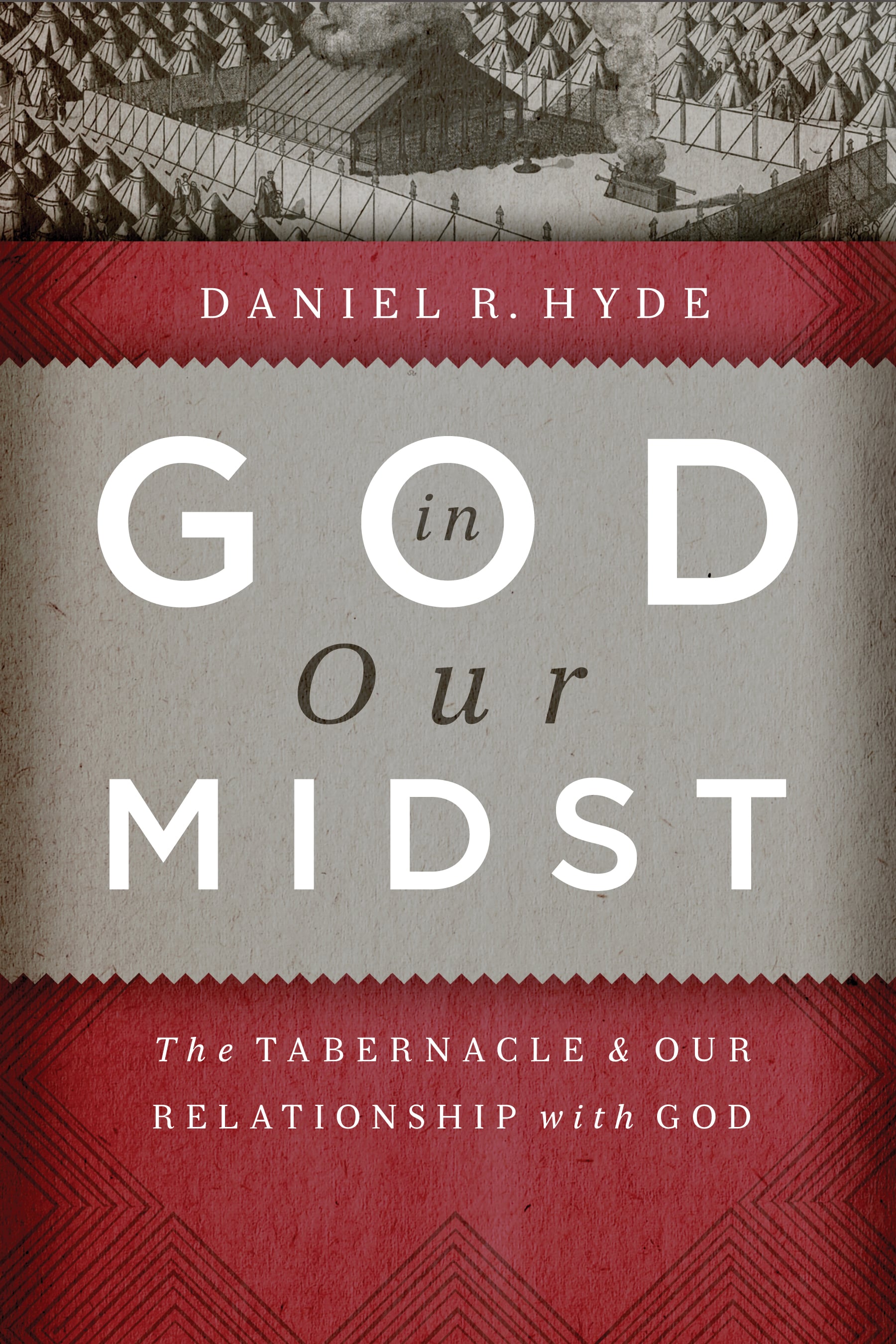
I admit to being a sceptic when it comes to books and sermon series about the tabernacle, priests garments, and so forth. It seems to me that some writers and preachers see too much in the tabernacle. Surely one or two sermons, or a dozen or so pages, ought to cover it? Surely the Gospels and Hebrews give all the inspired and authoritative explanation of the tabernacle that Christians need? In fact, in Hebrews when speaking of the tabernacle, the unnamed author says 'Of these things we cannot now speak in detail' (Hebrews 9:5).
This book by Pastor Daniel Hyde is 220 pages of text and I was thinking, before reading it, that he probably sees too much. I really liked Alec Motyer's 15 pages in The Message of Exodus. However, the tabernacle instructions form a large part of Exodus and are therefore important to understand. In reading a larger book about the tabernacle I would expect the following:
Daniel Hyde says 'The common purpose of Eden, the tabernacle, and the temple was that the creature could have fellowship with the Creator' (p. 25). He goes on to say:
They had experienced the reality that they were the "treasured possession" of the Lord (Ex. 19:5), but they had no Bibles. They had become a "kingdom of priests" (Ex. 19:6), but they had no catechisms. They had become a "holy nation" (ex. 19:6), but they had no Sunday school. How would the Lord teach a congregation that no doubt numbered two to three million souls (cf. Num. 1:45, 47) to leave behind the idolatry they had seen and experienced in Egypt, and to cling in faith to Him alone, having no other gods before Him (Ex. 20:3)? How would He instruct them to leave the false worship they had seen in Egypt and participate in the pure worship of God alone, having no carved images (Ex. 20:4)? The answer to these questions was the tabernacle. (pp. 45-46)The author then makes his way through the Exodus narrative. The contents of 'God in Our Midst' were originally sermons and therefore the book reads very well. One stand-out feature is the amount of scripture Hyde quotes, particularly scripture that links OT with NT. Another stand-out feature is the very searching application (e.g. see pp. 54-55 and pp. 69-70). A final stand-out feature are the quotes from Church Fathers, creeds, and confessions. These writings and documents, although not perfect, were often forged in defence against heresy and are often profound.
There are only a few places when I thought the explanation of some feature of the tabernacle furniture was overwrought. For example. in chapter 4 - The Table With Bread - Hyde explains the crown molding around the table was to keep the bread and all holy utensils from falling off the table. He then goes on to say that '[t]his is a wonderful picture of the care of God for His people' (p. 76). Maybe, maybe not. I wonder if this is a case of 'the right doctrine from the wrong text'? Also, in chapter 6 - The Construction of the Tabernacle - Hyde makes the link from detailed instructions given to Moses to instructions for the for the worship of the Church (i.e. the regulative principle of worship - we only do what God has positively commanded). But why is Jesus not the point of this? We only come to worship Jesus in the way he has described - through Jesus. I will need to mull these points over but on first read they seemed a little off when compared to the rest of Hyde's applications.
This is a good devotional book on a large part of scripture that could be a little remote to most Christians today. Daniel Hyde has done a good job in showing the relevance of the tabernacle. There was at least one line of thought that was hinted at in the book, particularly in the conclusion (pp. 209 - 211), which is rattling around in my head - the tabernacle was a picture of Heaven. I would love to read more about this.
So has Daniel Hyde cured my scepticism? A little, but I still like Alec Motyer's 15 pages.
* To comply with Federal Trade Commission guidelines, I will receive a free copy of the book as compensation for this review. It was supplied by Reformation Trust.
I must admit to being a little indifferent to reading about the Trinity. Many standard systematic theologies make it sound like the dullest and most difficult Christian teaching. The readers of such tomes is often left wondering what the practical benefit of the Trinity is. Also, I may be like many people and like my doctrine to be easily grasped by the mind and simply dismiss something that is too difficult (at least for me.)
The Good God is not like some of the previous books and sections in books that I have read on the subject of the Trinity. Reeves frequently has a great turn of phrase that makes the book an entertaining read - "Far, far from theological clutter, God's being Father, Son and Spirit is just what makes the Christian life beautiful." (p. 82)
The point of the book, according to the author, is to help the reader see the real difference the Trinity makes:
"For all that we may give an orthodox nod of the head to belief in the Trinity, it simply seems too arcane to make any practical difference to our lives." (p. ix)And what is the practical difference? Reeves summarizes:
"...but if God were just one person, then love of the other would not be central to his being. There would have been nobody in eternity for him to love. Thus the only God inherently inclined to show mercy is the Father who has eternally loved his Son by the Spirit. Only with this God do such winning qualities as love and mercy rank highly." (p. 91)The book is structured very simply in to four chapters dealing with the Trinity as presented in the Bible and church history and a fifth chapter acting as a capstone focusing on the glory of the Trinity. These chapters are:
This book has given me a hunger to study more about the Trinity, in the Bible and in church history, but even more importantly, it has given me a great hunger for the triune God I claim to worship. I recommend it to all Christians as well worth a slow, contemplative read. It would be great for book clubs to read and discuss. Maybe it could result in healthier Christians who just want to overflow with love.